
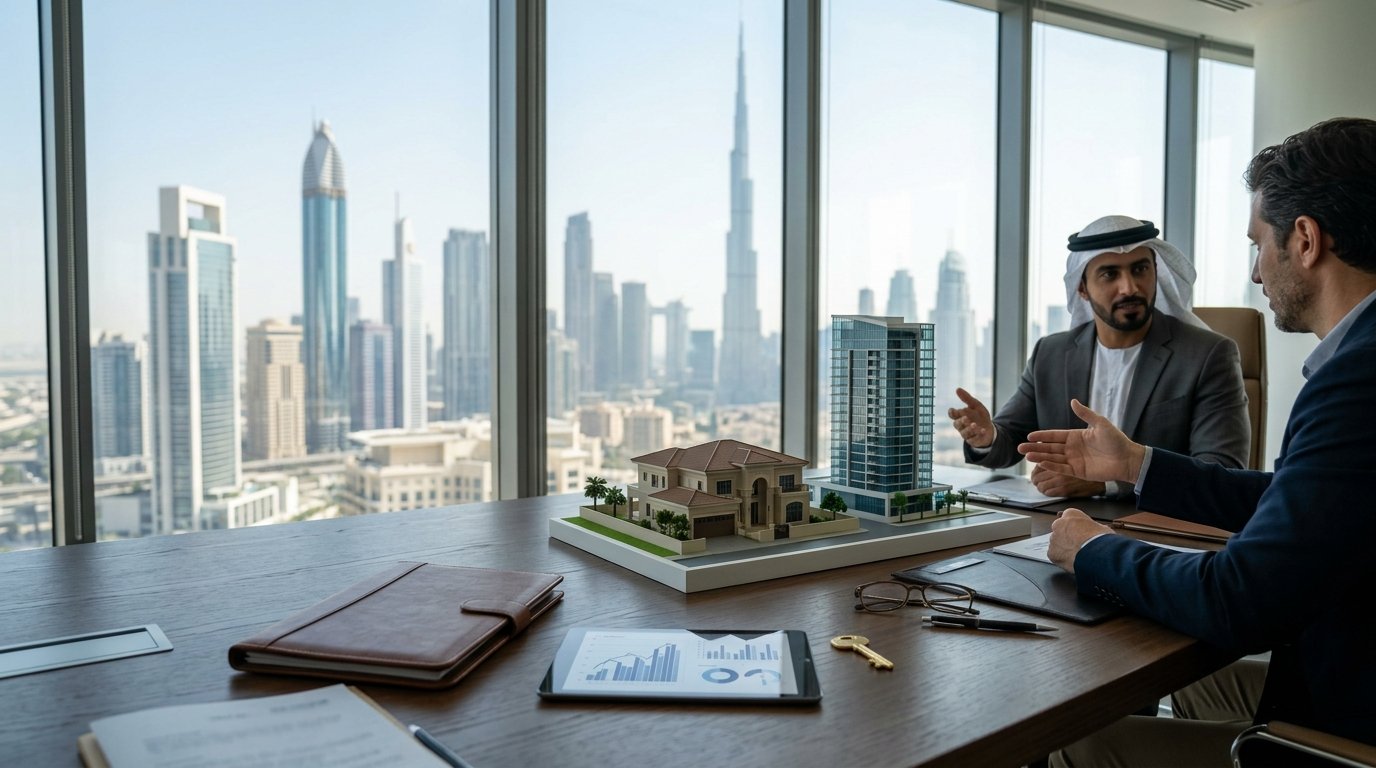
Direct personal ownership of high-value property in Dubai or the wider Emirates exposes investors to avoidable probate delays, public register disclosure, and forced heirship complications. Establishing a holding company UAE real estate structure solves these legal and structural risks by transferring title from an individual to an entity engineered for asset preservation.
Holding residential or commercial portfolios via corporate structures shields personal assets from operational liabilities, streamlines cross-border inheritance, and optimizes long-term tax positioning. This comprehensive guide evaluates the primary jurisdictions, regulatory requirements, tax implications, and costs of corporate real estate ownership in the UAE.
1. Why High-Net-Worth Investors Hold UAE Real Estate via Corporate Structures
Directly holding property in an individual name leaves your assets exposed to local probate court proceedings upon death, personal liability claims, and lack of privacy. Introducing a corporate layer changes the legal owner of the property to a corporate entity, meaning you own shares in the company rather than the title deed directly.
Key Advantages of Corporate Ownership
- Ring-Fenced Asset Protection: Separates personal real estate assets from operational business liabilities, creditor risks, or commercial litigation.
- Streamlined Estate & Inheritance Planning: Mitigates local probate delays and avoids forced heirship rules by utilizing corporate share transfer mechanics or foundation structures.
- Privacy & Anonymity: Keeps individual ultimate beneficial owner (UBO) identity off public real estate registers where permitted by registry regulations.
- Unified Portfolio Management: Enables ownership of multiple properties under a single legal entity for consolidated administration, rental collection, and refinancing.
2. Top Jurisdictions for Holding UAE Real Estate
Not all UAE free zones or offshore jurisdictions possess signed Memorandums of Understanding (MoUs) with the Dubai Land Department (DLD) or Abu Dhabi Real Estate Centre (ADREC) to hold real estate directly. Investors must select authorized frameworks tailored to their asset protection goals.
+-----------------------------------------------------------------------+
| UAE REAL ESTATE HOLDING VEHICLE OPTIONS |
+-----------------------------------+-----------------------------------+
| FREE ZONE & FINANCIAL CENTERS | OFFSHORE JURISDICTIONS |
| - DIFC Holding Co / Prescribed Co| - JAFZA Offshore Company |
| - ADGM Holding Co / SPV | - RAK ICC (via DIFC MoU) |
+-----------------------------------+-----------------------------------+
DIFC Prescribed Companies & Foundations
The Dubai International Financial Centre (DIFC) offers the DIFC prescription structure, an efficient, cost-effective vehicle designed specifically for asset holding. Regulated under common law, DIFC entities integrate directly with English-language courts and allow seamless incorporation of DIFC Wills or Foundation structures. This combination delivers world-class UAE asset protection structuring and absolute control over distribution to heirs.
JAFZA Offshore Corporate Holding
Jebel Ali Free Zone (JAFZA) remains one of the oldest and most established jurisdictions recognized by the DLD for direct property title deed issuance in Dubai. A JAFZA offshore property holding company allows non-resident investors to register Dubai real estate without maintaining a physical office footprint, offering lower annual renewal costs than full onshore free zone entities.
ADGM SPVs & RAK ICC Alternatives
- Abu Dhabi Global Market (ADGM): Offers Special Purpose Vehicles (SPVs) under common law, widely recognized for holding Abu Dhabi and Dubai real estate portfolios.
- RAK International Corporate Centre (RAK ICC): A cost-efficient offshore jurisdiction that can hold Dubai property via its direct MoU with the DLD or through a DIFC Prescribed Company connection.
3. Comparing UAE Real Estate Holding Vehicles
| Evaluation Factor | JAFZA Offshore | DIFC Prescribed Co / Holding Co | ADGM SPV | Standard Onshore Free Zone |
| DLD Recognition | Direct Title Deed | Direct Title Deed | Direct / ADREC | Requires Specific MoU |
| Legal Framework | Maritime / JAFZA Regulations | English Common Law | English Common Law | Civil Law |
| Inheritance Mechanics | Share transfer / Will | DIFC Foundation / Courts | ADGM Courts / Foundation | Local Sharia Probate Default |
| Physical Office Required | No (Registered Agent) | No (Flexi-desk / Registered Address) | No (Registered Address) | Flexi-desk / Physical Office |
| Corporate Tax Status | 0% (Qualifying Incomes) | 0% / 9% Standard | 0% / 9% Standard | 9% Standard (if non-qualifying) |
| Setup Cost Estimate | Low – Medium | Medium – High | Medium – High | Medium |
4. Tax Implications & Corporate Governance
Understanding UAE Corporate Tax and Value Added Tax (VAT) rules is essential when structuring a real estate portfolio holding company Dubai.
Corporate Tax Considerations
The UAE Corporate Tax Law (Federal Decree-Law No. 47 of 2022) imposes a 9% tax rate on taxable business profits exceeding AED 375,000. However, passive income generated from hold-and-lease residential real estate or capital gains realized on property disposal by non-conductive holding entities may qualify for specific tax exemptions under holding company regimes, provided adequate substance and structural compliance are maintained.
VAT Compliance for Holding Companies
- Residential Real Estate: Bare land sales and first-time supply of residential real estate within 3 years of completion are zero-rated. Subsequent residential leases and sales are exempt from VAT.
- Commercial Real Estate: Commercial property sales and leases attract a standard 5% VAT. A holding company owning commercial units must register for VAT if taxable supplies exceed the mandatory threshold of AED 370,000 per annum.
5. Strategic Recommendation Framework: Selecting Your Structure
Selecting the correct entity structure depends on property usage, asset location, and estate planning objectives:
- Single Residential Asset in Dubai (Budget-Conscious): Opt for a JAFZA Offshore Company. It offers cost-effective execution, simple administration, and direct DLD title deed registration without physical office requirements.
- Multi-Property Commercial Portfolio: Choose a DIFC Holding Company or ADGM SPV. Common law governance, flexible capital structures, and recognized legal frameworks facilitate bank refinancing and institutional investment.
- Legacy & Inheritance Planning UAE Property: Combine a DIFC Prescribed Company owned by a DIFC or ADGM Foundation. This eliminates personal probate entirely, ensuring seamless transition across generations without court intervention.
6. Take Control of Your Real Estate Portfolio Today
Structuring real estate through an optimized UAE holding company requires precise legal alignment between free zone registries, land departments, and tax authorities.
At Ezee Consultancy, our commercial advisory specialists engineer tailored holding structures that maximize privacy, secure long-term asset protection, and optimize tax positions.
Contact the advisory team at Ezee Consultancy today to request a personalized structure comparison and start your consultation.

